Maricopa, AZ · Garage Door Service
Why Rollers Fail Early on Stanfield's 1960s Garage Doors
Stanfield houses mostly date to 1960; original rollers wear out in the severe desert heat. We stock sealed rollers and drive from Maricopa to replace them.
- Repairs & new doors
- Springs & openers
- Serving 3 nearby communities
Where This Job Goes Sideways
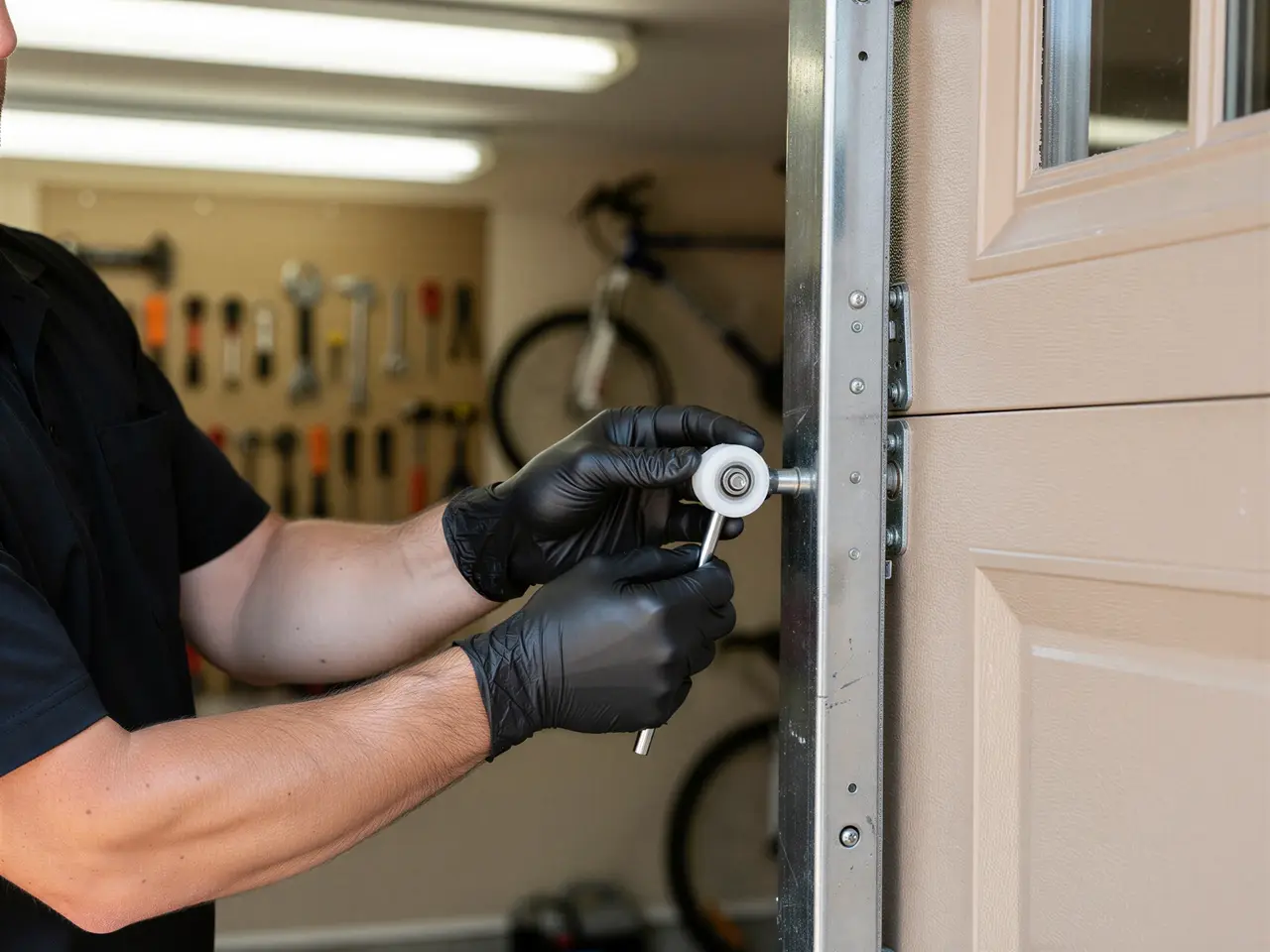
Most of the garage doors we see out in Stanfield went up around 1960, which puts this pocket at the older end of a service area where the stock generally runs 1960 to 1993. A door from that build year almost never has the hardware you'd expect on something newer. Steel rollers on a plain steel stem were standard then, riding in tracks that were never meant to carry forty-plus years of sun and sand. There's no plastic or nylon anywhere in the original build. What goes sideways on this job is assuming a 1960s track is the same gauge as what you'd find on a 1990s door down the road. It isn't, and a roller sized for the newer stock will bind or walk out of a narrower 1960s track. With only about 121 households in this part of Stanfield, we're not swapping rollers here every week, but when we do get the call, it's almost always this same hardware mismatch, not a generic worn-roller job you could lift off a shelf without checking the track first.
The Symptom
The complaint is usually the same: a grinding or popping sound as the door travels, worse at the top of the run where the door picks up speed. On a steel roller with a dry or pitted stem, that noise means metal is riding on metal with no bearing left to speak of. Summers here push well past the point where a stock roller holds up, and that's what's failing on these original tracks. Heat this severe doesn't just dry out lubricant faster than milder climates would. It also cooks any later plastic or nylon rollers a previous owner may have swapped in, so even a repair job from a few years back can be due again. If the door shudders more than it used to, or you can feel it catch at certain points rather than glide, that's the roller telling you it's done before it seizes completely and takes a cable or track bracket with it.
Stocked Parts
For a door built to 1960s spec, the fix is a full set of sealed nylon rollers with a hardened steel stem, sized to the narrower gauge track common on that era's doors rather than the wider track used on later builds. We carry these on the truck because they're the part that actually holds up against the heat band this whole area sits in, not because they're a universal upgrade. Nylon over steel also quiets the door down, which on a track this old matters more than it would on a newer, tighter-fitting setup. What we don't stock, and won't pretend to, is a replacement track section. If the rollers have been grinding long enough to groove the track itself, that's a second part and a longer job, and we'll tell you that on site rather than force a roller into a track it'll just chew through again.
The Cost of This Job
We don't have a posted price for roller replacement here, and we'd rather say that plainly than guess at a number that doesn't hold up once we're standing in front of your actual door and track condition. What we can tell you is the logistics: Stanfield sits about eleven miles out from our Maricopa base, so this isn't a job we treat as a quick walk-over between other calls, it's one we route a truck for. That doesn't change the work itself, just how we schedule it. The honest limitation here is that if the track is grooved or the door is original enough that the roller size no longer matches anything current, replacement rollers alone won't fix the shudder, and we'd be doing you a disservice to sell you that as a full repair.
Frequently asked questions
Are the rollers on my Stanfield house the same as what a newer house would need?
Probably not. Houses in this part of Stanfield mostly date to 1960, and the tracks built for that era run a narrower gauge than the 1980s and 90s stock common elsewhere in the service area. A roller sized for the newer track can bind or jump the rail on an older one, so we match the roller to the track we find, not the other way around.
Why do my rollers keep failing faster than they should?
The heat here is severe enough to break down lubricant and warp plastic or nylon parts faster than milder climates would. On an original steel roller from 1960, there's no bearing left to protect once the lubricant's gone, so you get metal-on-metal grinding. That's the wear pattern we see most on this side of the area.
Do you have a crew based in Stanfield?
No. We work out of Maricopa and drive out to Stanfield, about eleven miles each way, so this job gets scheduled as a truck run rather than fit into a same-day stop between closer jobs.
Can a roller fix solve a grinding door, or do I need a new track?
It depends on how long the grinding went on before the call. If a worn steel roller has already grooved the track, swapping rollers alone won't quiet the door or stop the catching. We'll check the track on site and tell you straight if it needs more than a roller swap.
Book garage door service in Maricopa
Call now or request a quote - tell us what the door is doing and where you are.