
Maricopa, AZ · Garage Door Service
Garage Door Installation Built for Maricopa Heat and Houses
New garage door installation sized for Maricopa's 1960-1993 housing stock and desert heat, with options that hold up on 1980s-90s openings across the area.
- Repairs & new doors
- Springs & openers
- Serving 3 nearby communities
What the Fix Involves
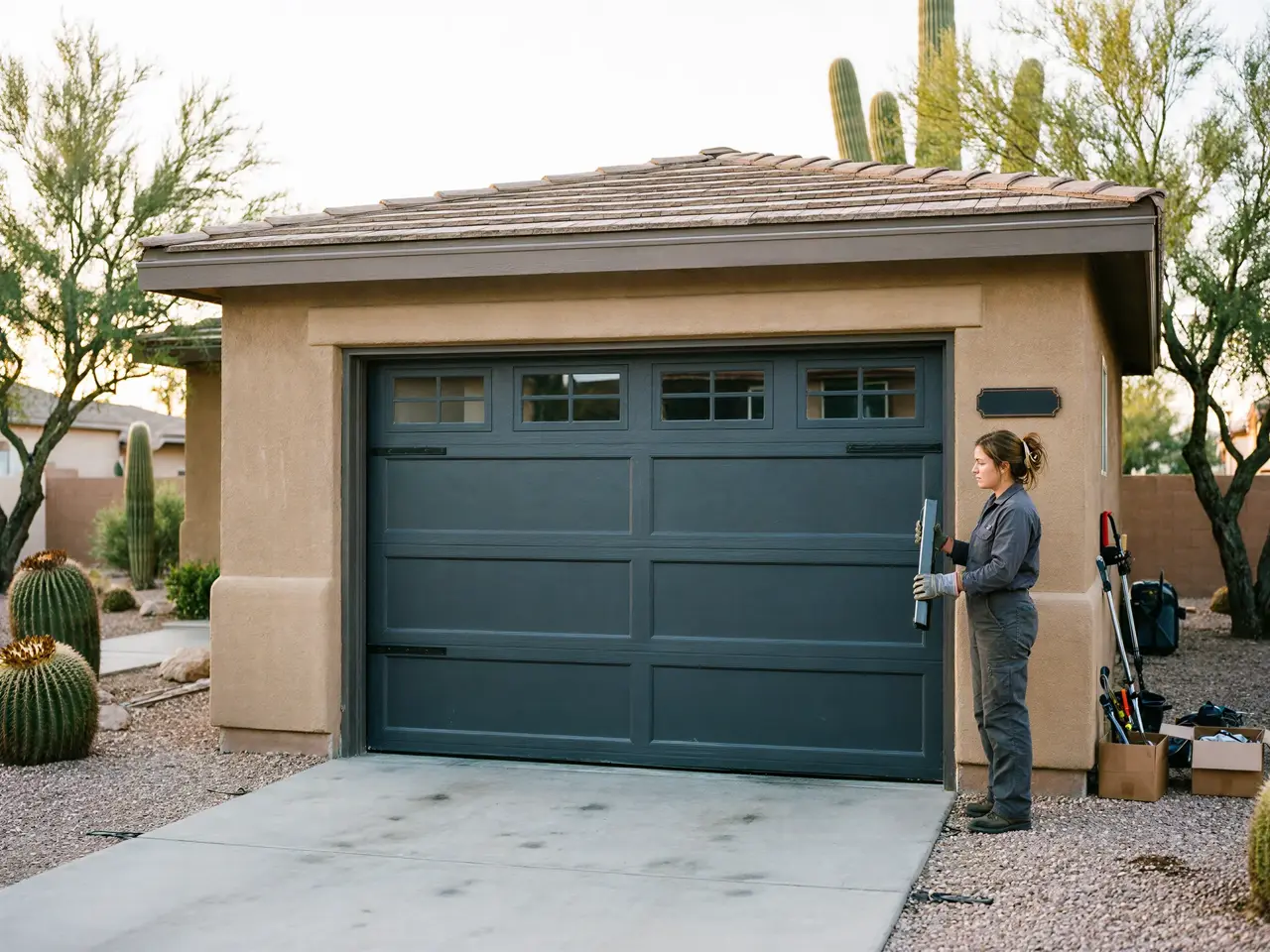
A full installation means pulling the old door off its track, checking the opening for square, and setting new jamb and header brackets before the panels go up. In Maricopa, most of that opening dates to somewhere between 1960 and 1993, with a lot of the stock clustered in the 1980s and 90s across the three main built-out areas of town. That matters because openings from that era were framed to builder specs that have shifted since, so a new door often needs shimming or a header reinforcement before it will track straight.
We also swap the track and rollers, not just the door skin. A new insulated panel on old, pitted track doesn't buy you much. Given the severe heat band this area sits in, we steer most installs toward doors with a thicker insulated core and better seal gaskets at the bottom and sides, since a thin single-layer panel absorbs a lot of radiant heat off the slab and transfers it straight to the garage interior.
The opener gets replaced or remounted depending on condition, and we set the force and travel limits to match the new door weight. That last step gets skipped more than it should, and it's the reason new doors slam or reverse wrong in the first month.
Doing It Yourself
Swapping a garage door yourself is possible if you've done framing work before and own a set of clamps and a tall ladder. The panels themselves aren't the hard part. The torsion spring system is, and it's also the part that puts people in the hospital when it unwinds under tension. If your house falls in that 1960-1993 build range common here, there's a decent chance the spring and drum setup is older hardware that doesn't match current part numbers, and you'll spend more time sourcing compatible pieces than hanging the door.
What we'd actually recommend skipping yourself: spring work, header reinforcement if the opening isn't square, and opener force calibration. What's fine to DIY: weatherstripping swaps, cosmetic panel cleaning, tightening loose hinges. If you want to save money, do the small stuff between visits and let a trained hand handle the spring and the structural tie-in. We won't talk you out of the easy half of the job, just the half that can break a rib.
The Symptom
The call we get most on installation jobs isn't "my door broke," it's "my door is fine but it's cooking the garage." Owners notice the garage ceiling and walls radiating heat into an attached laundry room or mudroom, especially on houses built in that 1980s-90s wave that makes up most of the stock in Maricopa's named areas. Thin, uninsulated steel doors from that era were never spec'd for a severe-heat climate band, so by midsummer the garage can run well above the outside air temperature.
The second most common symptom is a door that visibly sags or binds at the top corners, particularly on older single-layer panels that have spent three decades expanding and contracting in direct sun. That flexing works the hinges loose and throws the track out of alignment, which is usually the point where a repair stops being worth it and replacement starts making more sense.
Why It Happens Here
The pattern traces straight back to when and how this area got built out. With most homes going up between 1960 and 1993, and the bulk of that concentrated in 1980s and 90s construction across the three main neighborhoods, a large share of original garage doors are now 30 to 45 years old. That's past the realistic service life for any door, insulated or not, and it's well past it for the thin, uninsulated steel common on builder-grade installs from that period.
Layer on the climate: this area sits in a severe heat band, and a garage door is one of the largest unshaded surfaces on most houses, facing full sun for a good part of the day. Panels not built with a thermal break take that heat straight into the structure, and the expansion-contraction cycle day after day is what eventually warps panels and loosens hardware faster than it would in a milder climate. Median household income here runs around $63,545 across roughly 9,477 households, which is part of why we hear a lot of owners weighing a straight insulated-panel swap against a full install with new track and opener. Both are legitimate calls depending on how much of the original hardware is still sound.
Frequently asked questions
How old is a typical garage door I'd be replacing in Maricopa?
If your house was built in the common local range of 1960 to 1993, with a lot of that falling in the 1980s and 90s, your original door is likely 30 to 45 years old. That's beyond the normal service life for most steel doors, insulated or not, especially after decades of direct desert sun.
Does an insulated door actually help with Maricopa heat?
It helps more here than in milder climates because this area sits in a severe heat band. An insulated panel with a thermal break and good edge seals cuts how much radiant heat transfers from the sun-facing door into the garage, which matters most in attached garages near living space.
Can I just replace the panels and keep my old track?
Sometimes, if the track and rollers are still straight and the opening hasn't shifted. But on houses from the 1980s-90s wave common here, track from that era is often pitted or out of alignment, and reusing it under a new door usually just moves the next repair call a few months down the line.
Book garage door service in Maricopa
Call now or request a quote - tell us what the door is doing and where you are.