
Maricopa, AZ · Garage Door Service
What a Garage Door Repair Actually Costs in Maricopa
Maricopa homes built between 1960 and 1993 face specific garage door repair costs tied to desert heat and aging hardware. See what actually drives the price.
- Repairs & new doors
- Springs & openers
- Serving 3 nearby communities
The Cost of This Job
We can't quote you a number without seeing the door, but we can tell you what pushes a job up or down here. Maricopa's housing stock runs 1960 to 1993, with a median build year around 1990, and most of that stock sits in three main areas of mostly 1980s and 90s construction. That matters because a repair on a door from that era usually means matching hardware that isn't the current standard width or spring wind - which can add labor time versus a straight swap on a newer door. On the other side, a lot of these doors have steel rollers and galvanized springs that have simply outlasted their rated cycle count from years of heat exposure, so the part itself is cheap, the diagnosis is the real work. With a median household income of $63,545 across roughly 9,477 households, most owners here are weighing a $200-300 spring job against a four-figure full replacement - and for a door that's otherwise sound, repair almost always wins. The honest limit: if the opener and track are both failing at once on a door this old, we'll tell you straight that patching both separately usually costs more than a new system, and we won't talk you into doing it twice.
The Situation
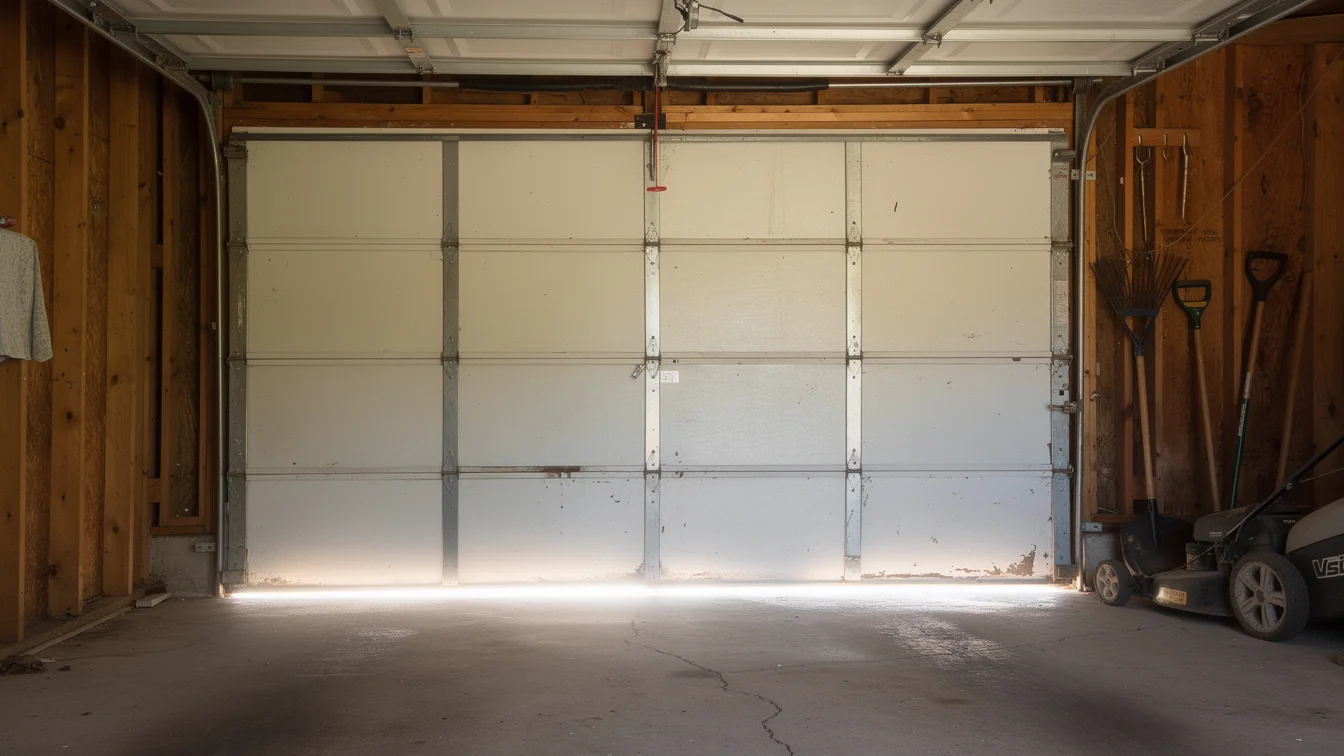
Walk most blocks in Maricopa and you're looking at a door that's somewhere between 30 and 65 years old, built in a run that stretches from 1960 up through 1993, with the bulk of the stock dating to the 1980s and 90s across the three main residential areas. That's a narrow enough window that the doors share real traits: steel panels without a lot of foam core, torsion or extension springs sized to a specific door weight, and openers that have usually already been replaced once by the time we get the call, since the chain-drive units from that build era don't make it 30 years without a motor swap. What you don't see as much here is the mix of eras you'd find in an older town with infill construction - this is a more uniform housing stock, built fast in a few concentrated waves. That uniformity actually makes diagnosis faster for us, because once we've seen one door from a given area's build year, we've usually seen the hardware pattern for the street.
How Local Conditions Play In
Maricopa sits in a severe heat climate band, and that's not a minor detail for a garage door - it's the single biggest factor in how fast the moving parts wear out. Torsion springs lose temper faster when they're cycling in triple-digit heat for months at a time, which is a big part of why spring failure is the most common call on doors from the 1980s and 90s stock that make up most of this town. Nylon rollers get brittle and crack in the same conditions; steel rollers hold up better but need more frequent lubrication because standard grease breaks down and gums up in sustained heat rather than just slowing things down. Openers suffer too - the logic boards in older chain-drive units weren't built with this kind of ambient heat load in mind, and we see more motor and capacitor failures here than you'd expect from age alone. None of this means doors fail faster everywhere in town the same way; a door that gets afternoon sun on a south or west wall takes it harder than one shaded by the house itself, but the base climate load is the same across every address.
Where People Go Wrong
The most common mistake we see is treating a noisy, slow-closing door as an opener problem when it's actually a spring that's lost tension from years of heat cycling - people replace the motor, the symptom comes back in a few months, and now they've paid twice. The second mistake is using a general-purpose spray lubricant instead of a product rated for this climate; it feels like it helps for a week, then the heat breaks it down faster than a proper garage door lubricant and the rollers end up drier than before. Third, on the oldest end of the stock - doors closer to that 1960 to 1970s range - some owners try to source a replacement part for the exact original hardware instead of accepting a compatible modern equivalent, which can turn a same-day fix into a multi-week wait for a part nobody local stocks anymore. And fourth: assuming repair is always cheaper than replacement. On a door from the 1980s or 90s that's already had one opener swap and is now showing spring and track wear at the same time, replacement can be the better math, not the fallback.
Frequently asked questions
Why do garage door springs fail so often in Maricopa specifically?
Maricopa sits in a severe heat climate band, and torsion springs lose their temper faster when they're cycling through months of high heat rather than moderate temperatures. Combined with a housing stock that's mostly 1980s and 90s construction, a lot of these springs are simply past their rated life and finally giving out from sustained heat stress.
Is my door's age a problem for finding parts?
Most Maricopa homes were built between 1960 and 1993, with the bulk from the 1980s and 90s. Doors from the later end of that range usually use hardware sizes still in common supply. The oldest doors, closer to 1960s-70s builds, sometimes need a compatible modern part rather than an exact original, which can add a short wait.
Should I repair or replace an older door?
If the springs or rollers are the only issue, repair almost always makes more financial sense given typical household budgets here. If the opener and track are both failing at the same time on a door already decades old, replacement often costs less in the long run than fixing both separately.
Related garage door services in Maricopa
More garage door guides
Book garage door service in Maricopa
Call now or request a quote - tell us what the door is doing and where you are.