
Maricopa, AZ · Garage Door Service
Roller Replacement for Sun Lakes' 1990s-Era Garage Doors
Most Sun Lakes homes date to around 1990, built with open-bearing steel rollers that dry out fast in Arizona heat. We replace them, traveling the 14 miles from Maricopa.
- Repairs & new doors
- Springs & openers
- Serving 3 nearby communities
Why It Happens Here
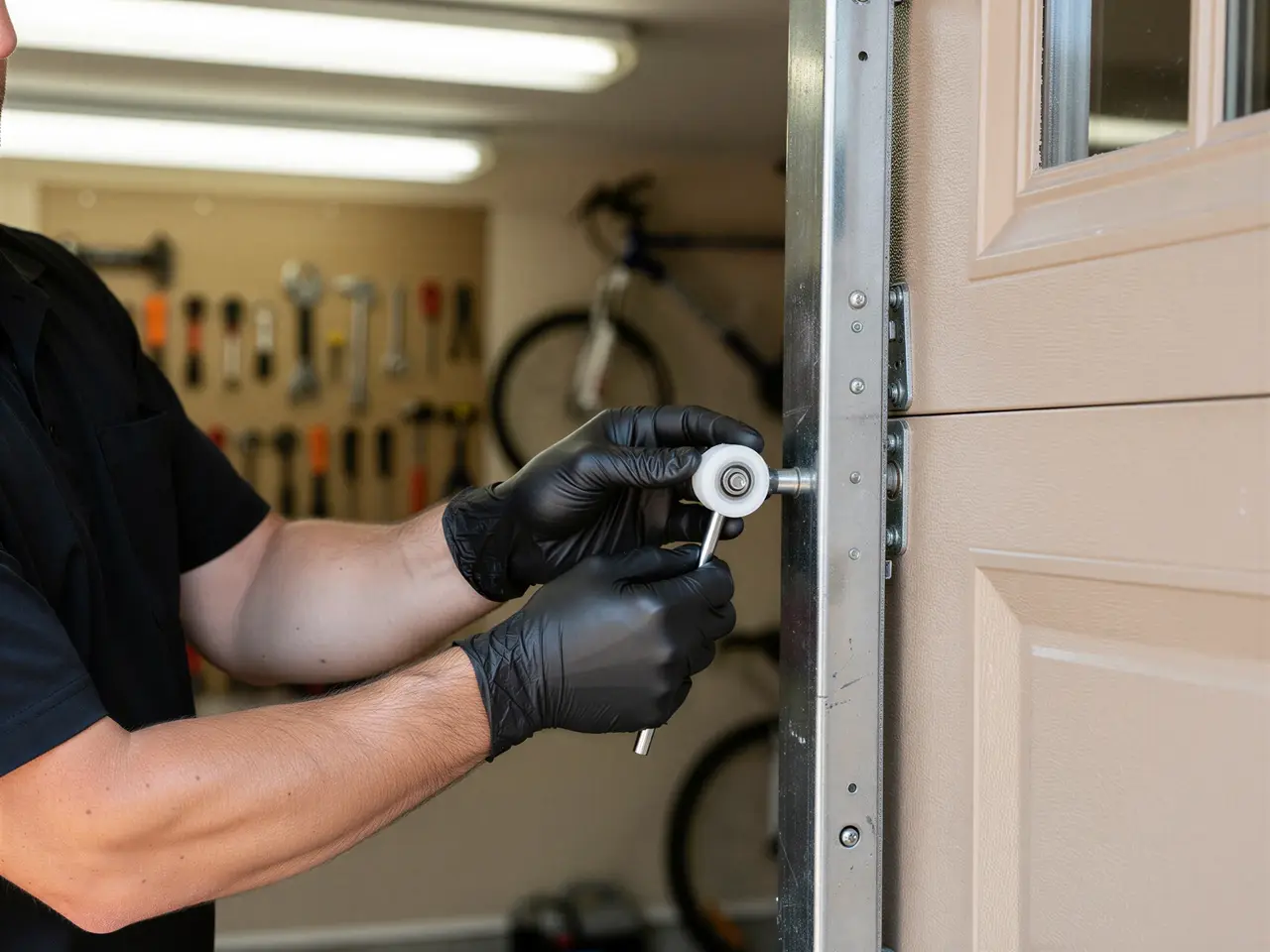
Housing stock across this part of the service area went up mostly between 1960 and 1993, with a median build year around 1990 - and Sun Lakes sits squarely in that window. Builders in that era spec'd steel sectional doors with stamped steel rollers riding on open ball bearings. That hardware was fine for the first decade or two. It's not fine thirty-plus years later, especially here, where the climate band is rated severe heat. Open bearings depend on grease staying put, and grease breaks down fast when the track metal sits at surface temperatures north of 150 degrees for months at a stretch. The result is rollers that chip, flat-spot, or seize in their own housings, and a door that starts grinding, hanging up on one side, or dropping out of its track entirely. If your house falls into that 1960s-93 build range - and most of this area does - the rollers now failing on your door are almost certainly original or a prior cheap steel replacement, not the sealed nylon kind that should go back in.
This isn't a defect story. It's just what 30-plus summers do to open-bearing steel in a hot climate. The fix is routine, but it's worth doing right rather than patching the same part again in two years.
The Cost of This Job
We don't post a flat number for roller jobs because track wear, spring condition, and whether the opener's travel limits need resetting after the swap all move the bill. What we can tell you is what drives the decision locally: with median household income here at $63,545, most owners want the repair that fixes the actual failure, not a full door replacement sold as the only option. A straight roller swap - pulling the worn steel rollers and setting sealed nylon ones in their place - is a parts-and-labor job, not a door-and-opener job, and it's priced that way.
Where cost can climb is if the old steel rollers have already chewed up the track, which happens when a flat-spotted roller keeps grinding in the same spot for months before anyone calls. At that point you're also paying to true or replace the track section, and that's a fair add, not an upsell. We'll show you the worn spot before we quote it.
Doing It Yourself
Roller replacement looks like a weekend job on paper - pull a roller, slide in a new one, repeat ten times. The part that bites people is the bottom brackets, which are under spring tension on a torsion-spring door and can take a finger off if you pull the wrong bracket first. If your door is original to a late-1980s or 1990-built house, assume the springs are original too, which means they're decades past the cycle count they were rated for and more likely to let go without warning.
If you're comfortable with the top rollers - the ones not near a loaded bracket - and your door is a standard lightweight single, that's lower-risk work for someone with the right pliers and patience. We'd rather tell you that honestly than pretend every roller swap needs a truck. What we won't talk you through over the phone is the bottom roller and bracket on a torsion system; that one's worth the call.
Stocked Parts
Because so much of the housing here dates to the 1960-1993 window - and specifically clusters in that late-80s to early-90s stretch - the roller size and stem length that fits these doors is one of the more common parts on the truck. Sealed 10-ball nylon rollers with a standard 4-inch stem cover the bulk of what we pull out of houses built in that run. We carry them because the pattern repeats across this service area's three main older pockets of housing, not because every job is identical.
What we don't stock on the truck is anything custom - oversized commercial rollers, odd European stem lengths, that kind of thing. If your door turns out to be a non-standard import or a heavy insulated panel door someone added later, that part may need to be ordered, and we'll say so up front rather than guess.
What the Fix Involves
The job starts with disconnecting the opener and securing the door in the open position, then backing off the bottom bracket bolts only after the spring tension is confirmed safe to work around - this is the step that gets people hurt when they skip it. Each roller comes out of its track slot one at a time, starting at the top where there's no tension to manage, working down to the bottom brackets last.
We check the track alignment while the rollers are out, since a bent or widened track is what actually causes most of the grinding and binding people call about, not the roller itself. New sealed rollers go in, the door gets walked up and down by hand to check for drag before the opener's reconnected, and the travel limits get rechecked - rollers riding slightly differently in the track can throw off where the opener thinks the door is fully closed.
The Symptom
The giveaway is a grinding or rumbling noise that tracks with the door's movement rather than staying constant - loudest right as a particular roller passes through the curved section of track near the top of the opening. You might also see the door hesitate or jerk at that same spot every single cycle, which tells you it's one or two specific rollers, not the whole set, though by the time one goes the rest from the same build year usually aren't far behind.
A door that's started binding on one side only, or that needs a shove partway through its travel, is describing worn rollers more often than a bad opener. If the noise is a single loud bang instead, that's a different problem - likely a spring - and rollers won't fix it.
Frequently asked questions
Why do Sun Lakes garage doors seem to need rollers replaced around the same age?
Because so many houses here were built in the same stretch - mostly 1960 through 1993, with a lot clustering near 1990 - the original steel rollers are all aging out together. Combined with the severe summer heat drying out the grease in open bearings, doors from that build era tend to start grinding at a similar point in their life.
Can I just replace the worn rollers instead of the whole door?
In most cases, yes. If the track isn't badly gouged and the springs and panels are sound, swapping the rollers for sealed nylon ones solves the noise and binding without replacing hardware that's otherwise fine. We check the track before quoting so you're not paying to fix something that doesn't need it.
How do I know if it's the rollers or the opener?
Watch where the noise happens. If it grinds or jerks at the same spot in the door's travel every time, especially near the curved top section of track, that points to a roller. A problem that happens regardless of door position, or only at startup, is more likely the opener or the spring.
Do you keep a truck in Sun Lakes?
No - we run out of Maricopa and cover Sun Lakes as part of that service area, about 14 miles out. We carry the roller sizes that fit this area's common 1980s-90s door stock on the truck, so a straight roller job doesn't usually need a second trip.
Book garage door service in Maricopa
Call now or request a quote - tell us what the door is doing and where you are.