
Maricopa, AZ · Garage Door Service
Keeping 1990s Garage Door Hardware Running in Sacaton
Sacaton homes built around 1993 still run on original torsion springs and rollers. Here's what that hardware needs before Arizona heat wears it out.
- Repairs & new doors
- Springs & openers
- Serving 3 nearby communities
The Cost of This Job
We don't post a flat number for maintenance in Sacaton because what we find depends on how much of the original hardware is still on the door. Houses here cluster around a 1993 build year, which means a lot of garages are still running the same torsion spring, same rollers, and same cable drums the builder installed. A tune-up on a door that's never been touched costs more in parts than one that's had a spring swap in the last decade, simply because more is original and more is worn. We price the visit after we see the door, not before, because guessing low on a 30-year-old spring and then surprising you at the truck isn't how we want to do this job. Expect the estimate to include labor and whatever parts are actually tired - lubrication alone, a roller set, or a full spring replacement if the coil shows stress cracking. We travel the 14 miles from Maricopa to get to Sacaton, so we bundle the drive into one visit rather than a diagnostic trip followed by a second trip for the fix.
Why It Happens Here
Sacaton's housing stock sits right in the middle of the broader area's 1960-1993 build range, and most of what's standing here went up in the 1980s and 90s. That matters for maintenance because doors from that era were built with galvanized torsion springs rated for a normal climate, not for the kind of sustained heat this part of Arizona actually sees. The severe heat band this region falls into cooks the lubricant out of rollers and cable, dries out spring coating, and speeds up metal fatigue in ways a door in a milder climate wouldn't experience. A spring that might run another five years in a cooler state is often already showing rust bloom and uneven coil spacing here by year 25. We see the same pattern across the roughly 706 households in Sacaton that fall into this build window: original springs, original rollers, and openers that have never had a safety-sensor check since installation. None of that is unique to one house - it's the building-code era and the climate working on the same hardware at the same time.
Stocked Parts
We carry the parts that actually fail on 1980s-90s doors: standard-wind torsion springs in common residential sizes, steel rollers, lift cable, and the bearing plates that seize up after decades of heat-cycling. What we don't stock on the truck is anything custom-cut for a nonstandard door width or an opener model that's been out of production for years - that's a special-order part, and we'll tell you the lead time honestly instead of promising a same-visit fix we can't deliver. For a Sacaton door built in the early 90s, the most common swap is the torsion spring and the bottom roller set together, since they wear on roughly the same timeline. If your opener is original too, the drive gear and the safety reversal sensors are worth checking even if they haven't failed yet - heat-dried grease in the gearbox is a slow failure, not a sudden one, and maintenance is where we catch it before it strands the door shut.
Doing It Yourself
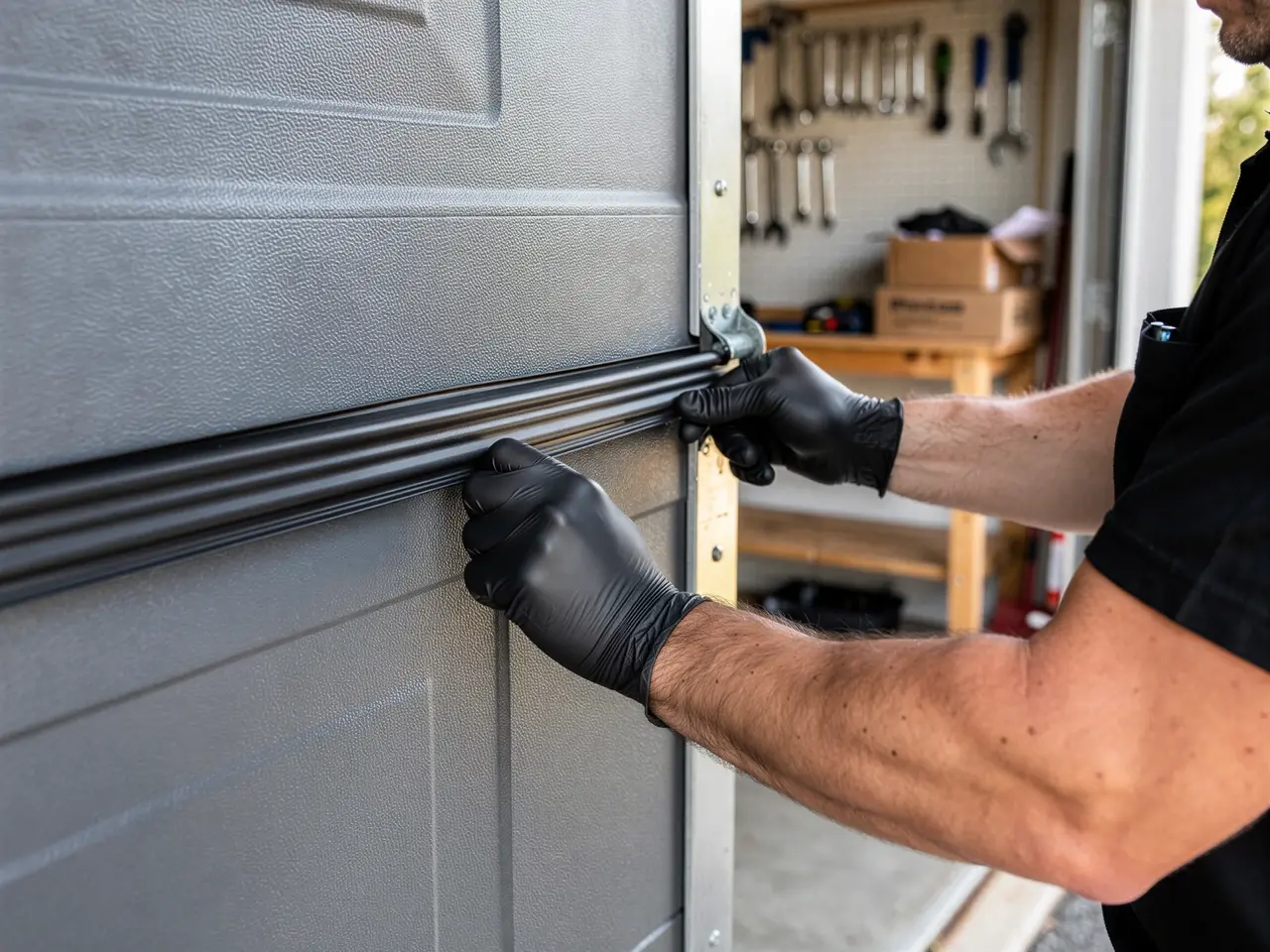
There's real maintenance you can do yourself on a door this age: wipe down and re-lubricate the rollers and hinges twice a year, check that the auto-reverse safety feature still stops the door on contact, and look at the bottom seal for heat cracking since that's a cheap swap you can do without tools. What you should not do yourself is touch the torsion spring. On a door built in 1993 that spring has been under full tension for three decades, and a coil that's rusted or cracked can let go with enough force to break bones. That's not a company line - it's physics on old, heat-fatigued steel. If you're not sure how worn your spring looks, send us a photo before you put a wrench anywhere near the winding cone. The honest limitation here: we can't diagnose a cable or drum failure over the phone, and quoting a price sight-unseen on hardware this age is how both of us end up disappointed.
Frequently asked questions
How old is the hardware on my garage door likely to be?
If your house in Sacaton was built around the area's 1993 median year, there's a real chance the torsion spring, rollers, and cable are original to the house. Builders didn't over-spec springs for Arizona heat, so original hardware from that era is usually past its expected working life and worth a look even if the door still opens fine.
Why do springs fail faster here than in cooler climates?
This region sits in a severe heat band, and sustained high temperatures dry out the protective coating on torsion springs and bake the lubricant out of rollers and bearings faster than in a mild climate. A spring rated for 10,000 cycles in average conditions often shows rust and fatigue well before that count here.
Do you have a shop in Sacaton?
No, we run out of Maricopa and drive the 14 miles to Sacaton for every call. We bring stocked parts on the truck so most maintenance visits are handled in one trip, but we don't keep a local branch or promise a specific response window for this area.
Can I replace my own torsion spring to save money?
We don't recommend it, especially on a door this age. A torsion spring under full tension for 30 years in a hot climate can be more brittle than it looks, and a failure while winding or unwinding it can cause serious injury. Lubrication, hinge checks, and seal inspection are safe DIY jobs - the spring isn't.
Book garage door service in Maricopa
Call now or request a quote - tell us what the door is doing and where you are.